Most water main problems don't happen suddenly. They tend to develop gradually — sometimes over years — before they become obvious enough to act on. By the time you're standing in a flooded basement or watching water bubble up through the lawn, something has usually been building quietly for quite a while.
That's both a challenge and an opportunity. A challenge because the early signs are easy to dismiss; an opportunity because catching something early generally means a simpler, less disruptive repair. This article walks through the most common indicators — starting with the subtle ones that many homeowners miss entirely.
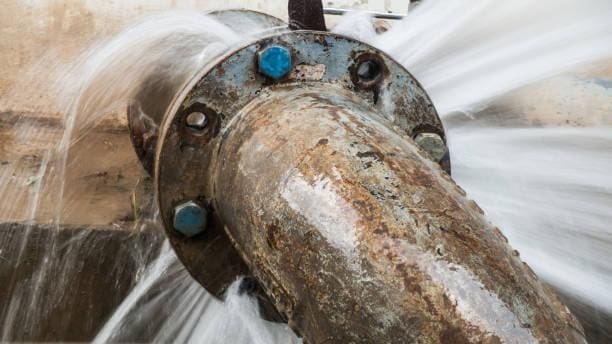 Older pipe materials — particularly galvanized steel and some lead-alloy varieties — are more prone to gradual deterioration than modern alternatives.
Early Warning Signs: The Ones People Often Miss
Unexplained Increases in Your Water Bill
One of the most reliable early indicators of a water line problem isn't something you see — it's something you notice when the bill arrives. If your water usage patterns haven't changed but your bill has climbed noticeably over a billing period or two, water is going somewhere it shouldn't be.
A slow leak in a buried water main can lose a surprising amount of water over time without being visible at the surface, especially in clay-heavy soils that absorb moisture well. In some cases, homeowners have had leaks running for months without any visible ground disturbance — just a progressively higher water bill.
The important thing is to rule out obvious indoor causes first: a running toilet, a dripping tap, an older appliance leaking. If those check out, and the bill continues to rise, the supply line warrants a closer look.
Reduced Water Pressure — Especially If It's Gradual
A sudden drop in water pressure across the whole house is easier to notice. But the more common scenario is a gradual reduction over weeks or months — the kind of change where you don't notice it until it's become significant.
Low pressure has many causes (municipal pressure issues, corroded interior pipes, partially closed valves), so this symptom alone isn't diagnostic. However, when combined with other signs on this list, it's worth taking seriously.
One way to check: if the pressure at one fixture is significantly lower than others, the issue is likely localised. If all fixtures are running weaker than they used to, and there's no municipal maintenance underway in your area, the supply main is worth investigating.
Discoloured or Murky Water
Brown or rust-coloured water coming through taps usually signals one of two things: disturbance to corroded interior pipes, or a breach in the supply line that's allowing sediment or soil contact. The latter is the more serious scenario — it indicates potential contamination of the water supply and generally warrants immediate attention.
Temporary discolouration (a minute or two after turning on a tap that hasn't been used for a while) is usually less concerning and is common in older homes with iron pipes. Persistent discolouration or visible sediment is a different matter.
More Visible Indicators
Soft, Saturated, or Unusually Green Patches in the Yard
When water escapes from a buried pipe and migrates upward, it saturates the soil above it. Depending on soil type and depth, this can appear as soft ground that sinks underfoot, persistently wet patches even in dry weather, or — particularly in summer — an area of unusually lush green grass while the surrounding lawn looks normal.
This is one of the more reliable indicators that something is leaking below ground. The challenge is that it's not always above the problem area — water follows the path of least resistance through soil, so the surface expression of a leak might be a metre or more from the actual break point.
Sinkholes or Indentations in the Lawn
As a slow leak erodes soil over time, small cavities can form underground. These sometimes collapse suddenly, creating a visible sinkhole or depression. The size can range from something roughly the diameter of a football to a few metres across, depending on how long the leak has been running and soil composition.
Any new depression in a lawn that doesn't correlate with obvious surface causes (a rotting tree root, for example) should be taken seriously. Do not walk over or probe a significant sinkhole until the area has been assessed.
Cracks in the Foundation or Driveway
Extended water infiltration from a leaking line can destabilise the soil around and under a structure. Over time, this uneven saturation can lead to differential settling — where one part of the foundation or driveway moves slightly relative to another. The resulting cracks are sometimes the first thing that prompts an investigation.
Of course, foundation cracks have many causes, and not all of them involve water lines. But a pattern of cracks combined with other signs here — soft ground, pressure changes, elevated bills — is worth evaluating as a connected problem rather than independently.
Indoor Signs: When the Problem Reaches the House
Damp Patches in the Basement Walls or Floor
Where the service line enters the foundation, any movement of the pipe or degradation of the seal can allow water to penetrate the basement. This often appears as damp patches near where the pipe enters, sometimes accompanied by minor efflorescence (white mineral deposits left by evaporating water).
Not all basement moisture indicates a water main problem — many basements deal with groundwater or condensation issues. The diagnostic question is: is the moisture concentrated near the pipe entry point, and is it present consistently rather than seasonally?
Sound of Running Water When Everything Is Off
A hissing or rushing sound coming from walls, floors, or the mechanical room when all fixtures are off can indicate a pressurised leak. This symptom is more common with higher-pressure leaks — slower seeps often don't produce an audible signal without specialised equipment.
When to Take Action
None of the signs above, in isolation, definitively confirms a water main problem. Most have multiple possible explanations. But if you're noticing two or more of these indicators — especially if they've appeared or worsened over a similar timeframe — it's worth having someone who knows what to look for assess the situation.
In Ontario, the service line (the pipe running from the municipal main to your home) is generally the homeowner's responsibility once it's on your property. The practical implication: if there's a problem, understanding it sooner tends to give you more options and more control over what happens next.
- Unexplained water bill increases over consecutive months
- Gradual drop in whole-house water pressure
- Persistent or recurrent discoloured water
- Soft, wet, or unusually green patches in yard
- New depressions or sinkholes in lawn or driveway
- Foundation or driveway cracks without obvious cause
- Damp patches near where the supply pipe enters the house
- Sound of water running when nothing is in use
What an Assessment Involves
A preliminary assessment of your water line typically involves a combination of visual inspection of accessible areas, pressure testing, and in some cases ground-penetrating techniques or acoustic leak detection — tools that can identify leak locations without excavation.
The goal of an early assessment isn't necessarily to launch into a repair. Sometimes the conclusion is: "monitor this for now, here's what to watch for." Sometimes it reveals a specific problem with a clear repair path. The value is in having accurate information rather than guessing.
Have concerns about your water line?
If you've noticed one or more of the signs described above, feel free to describe your situation through our contact form. We'll give you an honest assessment of what it might mean and what options you'd typically have.
Describe Your Situation